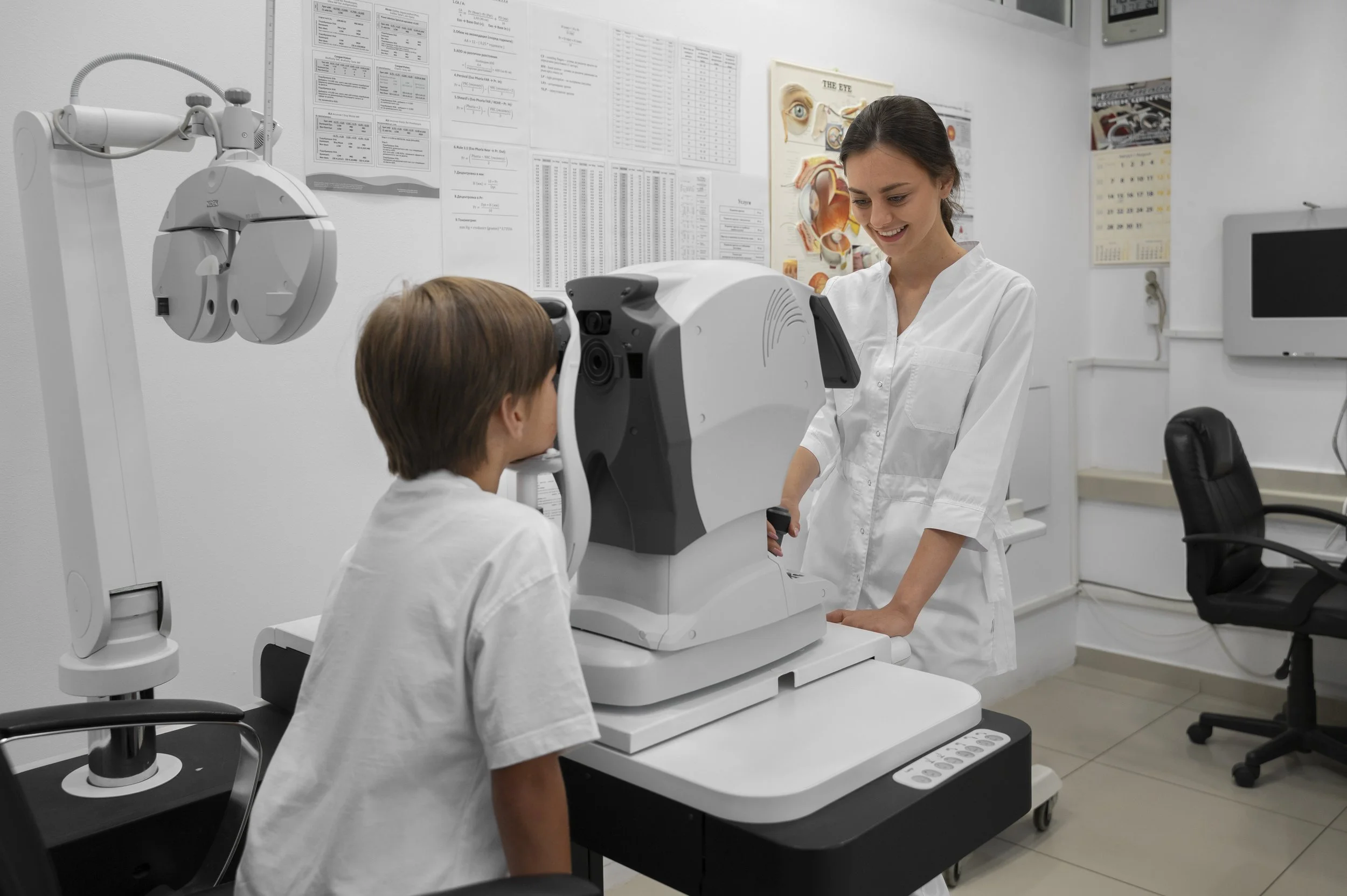
Pediatric Eye CareProtecting Your Child’s Vision as They Grow
Healthy vision plays an important role in your child’s development and learning. Regular eye examinations can help identify vision and eye health problems early, even when they may not be detected through routine pediatric or school screenings.
Signs to Watch ForKnow the Signs of a Possible Vision Problem
Parents should be aware of changes that may indicate a vision problem. Some signs to watch for in young children include:
White pupil instead of black
Abnormal or different “red eye” in photographs
Abnormal eye movement in children over 6 months old
Chronic tearing
Constant eye rubbing
Extreme light sensitivity
Chronic eye redness
Head tilting
Squinting
Sitting too close to the television
Having a hard time reading or losing their place while reading
Trouble reading the blackboard at school
Unable to see objects at a certain distance
Avoidance of near tasks
Behavioral issues
Letter reversals
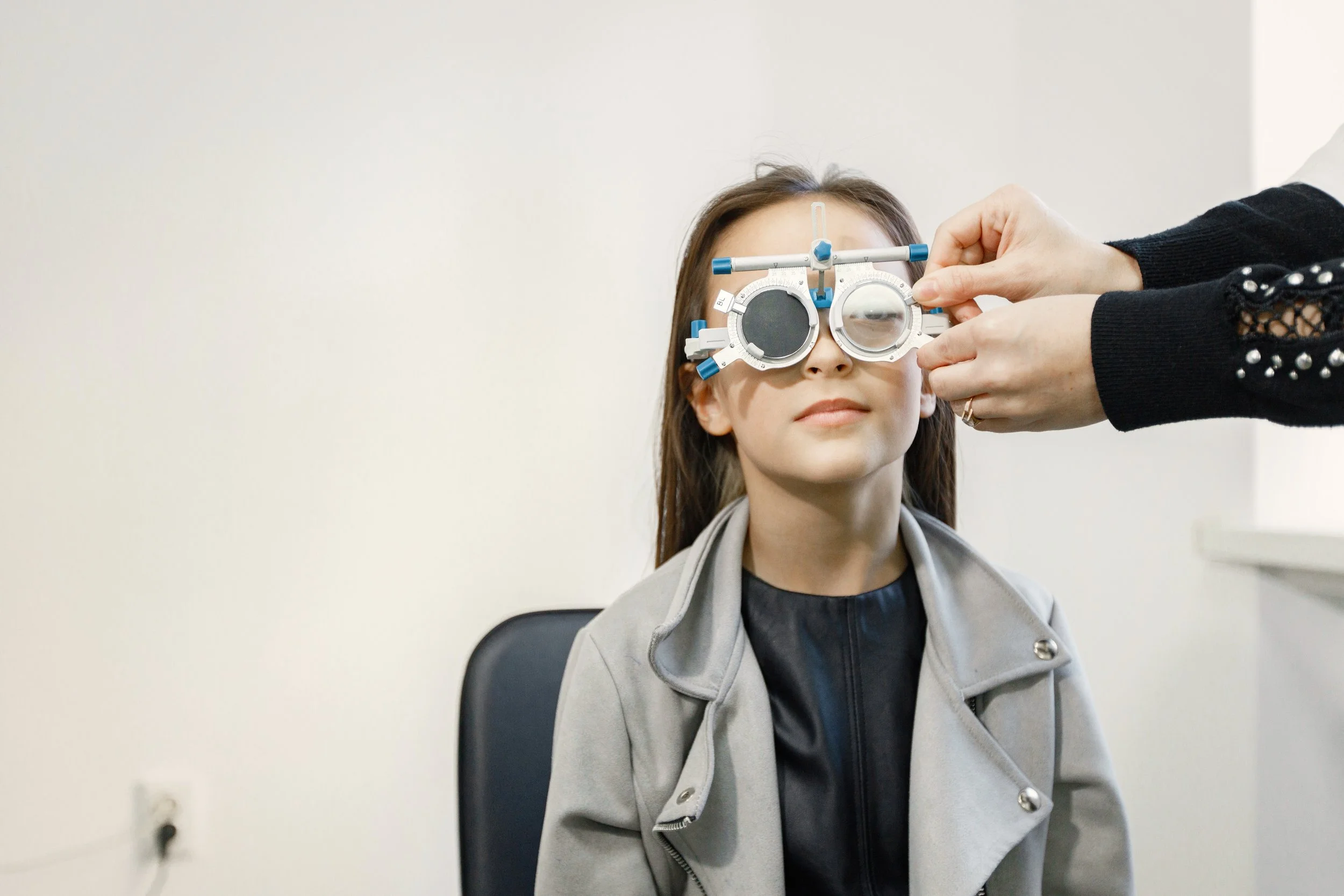
Eye Care by AgeRegular Eye Exams Support Healthy Vision
Children’s eye health needs change as they grow. Regular examinations help identify vision and eye health concerns at different stages of development.
Newborns: General eye health should be examined by a pediatrician or family physician while at the hospital.
High-Risk Newborns: Newborns who are premature or have a family history of eye problems should be examined by an eye doctor as soon as possible, often while still in the hospital.
Infants: A comprehensive or “well baby” visit with a pediatric optometrist or ophthalmologist is recommended between 6 months and 1 year of age, or immediately if specific problems are noticed. Annual examinations are recommended.
Children: Children should have annual eye examinations by an eye doctor. Pediatrician and school screenings can detect large vision problems but may not identify all eye health conditions, binocular vision problems, or difficulty focusing.
Around Age 3: Eye problems such as eye turns or lazy eye can appear around this age and should be treated as soon as possible to help avoid vision loss.
School-Age Children: Annual eye examinations can help identify vision-related learning difficulties that may not be detected through regular screenings.